SYSTRAN, founded by Dr. Peter Toma in 1968, is one of the oldest machine translation companies. SYSTRAN has done extensive work for the United States Department of Defense and the European Commission. SYSTRAN provided the technology for Yahoo! Babel Fish until May 30, 2012, among others. It was used by Google's language tools until 2007. SYSTRAN is used by the Dashboard Translation widget in macOS. Commercial versions of SYSTRAN can run on Microsoft Windows (including Windows Mobile), Linux, and Solaris. Historically, SYSTRAN systems used rule-based machine translation (RbMT) technology. With the release of SYSTRAN Server 7 in 2010, SYSTRAN implemented a hybrid rule-based/statistical machine translation (SMT) technology which was the first of its kind in the marketplace. As of 2008, the company had 59 employees of whom 26 are computational experts and 15 computational linguists. The number of employees decreased from 70 in 2006 to 59 in 2008. In January 2024, ChapsVision acquired Systran. == History == With its origin in the Georgetown machine translation effort, SYSTRAN was one of the few machine translation systems to survive the major decrease of funding after the ALPAC Report of the mid-1960s. The company was established in La Jolla in California to work on translation of Russian to English text for the United States Air Force during the Cold War. Large numbers of Russian scientific and technical documents were translated using SYSTRAN under the auspices of the USAF Foreign Technology Division (later the National Air and Space Intelligence Center) at Wright-Patterson Air Force Base, Ohio. The quality of the translations, although only approximate, was usually adequate for understanding content. The company headquarters is in Paris, while its U.S. headquarters is in San Diego, CA. During the dot-com boom, the international language industry started a new era, and SYSTRAN entered into agreements with a number of translation integrators, the most successful of these being WorldLingo. In 2016, the Harvard NLP group and SYSTRAN founded OpenNMT, an open source ecosystem for neural machine translation and neural sequence learning. This has enabled machine translation software with learning capabilities, dramatically increasing MT translation quality. The project has since been used in several research and industry applications, and its open source ecosystem is currently maintained by SYSTRAN and Ubiqus. == Business situation == Most of SYSTRAN's revenue comes from a few customers. 57.1% comes from the 10 main customers and the three largest customers account for 10.9%, 8.9%, and 8.9% of its revenues, respectively. Revenues had been declining in the early 2000s: 10.2 million euros in 2004, 10.1 million euros in 2005, 9.3 million euros in 2006, 8.8 million euros in 2007, and 7.6 million euros in 2008, before seeing a rebound in 2009 with 8.6 million euros. == Languages == The following is a list of the languages in which SYSTRAN translate from and to English: Russian into English in 1968 and English into Russian in 1973 for the Apollo–Soyuz project.
Visual Expert
Visual Expert is a static code analysis tool, extracting design and technical information from software source code by reverse-engineering, used by programmers for software maintenance, modernization or optimization. It is designed to parse several programming languages at the same time (PL/SQL, Transact-SQL, PowerBuilder...) and analyze cross-language dependencies, in addition to each language's source code. Visual Expert checks source code against hundreds of code inspection rules for vulnerability assessment, bug fix, and maintenance issues. == Features == Cross-references exploration: Impact Analysis, E/R diagrams, call graphs, CRUD matrix, dependency graphs. Software documentation: a documentation generator produces technical documentation and low-level design descriptions. Inspect the code to detect bugs, security vulnerabilities and maintainability issues. Native integration with Jenkins. Reports on duplicate code, unused objects and methods and naming conventions. Calculates software metrics and source lines of code. Code comparison: finds differences between several versions of the same code. Performance analysis: identifies code parts that slow down the application because of their syntax - it extracts statistics about code execution from the database and combines it with the static analysis of the code. == Usage == Visual Expert is used in several contexts: Change impact analysis: evaluating the consequences of a change in the code or in a database. Avoiding negative side effects when evolving a system. Static Application Security Testing (SAST): detecting and removing security issues. Continuous Integration / Continuous Inspection : adding a static code analysis job in a CI/CD workflow to automatically verify the quality and security of a new build when it is released. Program comprehension: helping programmers understand and maintain existing code, or modernize legacy systems. Transferring knowledge of the code, from one programmer to another. Software sizing: calculating the size of an application, or a piece of code, in order to estimate development efforts. Code review: improving the code by finding and removing code smells, dead code, code causing poor performances or violations of coding conventions. == Limitations == As a static code analyzer, Visual Expert is limited to the programming languages supported by its code parsers - Oracle PL/SQL, SQL Server Transact-SQL, PowerBuilder. A preliminary reverse engineering is required. Visual Expert does it automatically, but its duration depends on the size of the code parsed. Users must wait for the parsing completion prior to using the features, or schedule it in advance. They must also allocate sufficient hardware resources to support their volume of code. Visual Expert is based on a client/server architecture: the code analysis is running on a Windows PC - preferably a server. The information extracted from the code is stored in a RDBMS, communicating with a client application installed on the programmer's computer - no web client is available. This requires that the code, the parsers, the RDBMS and the programmers’ computers are connected to the same LAN or VPN. == History == 1995- 1998 - Prog and Doc - Initial version distributed on the French market 2001 - Visual Expert 4.5 2003 - Visual Expert 5 2007 - Visual Expert 5.7 2010 - Visual Expert 6.0 2015 - Visual Expert 2015 - Server component added to schedule code analyses 2016 - Visual Expert 2016 - Oracle PL/SQL code parser, code inventory (lines of code, number of objects…) 2017 - Visual Expert 2017 - SQL Server T-SQL code parser, Code comparison, CRUD matrix 2018 - Visual Expert 2018 - DB Code Performance Analysis, integration with TFS 2019 - Visual Expert 2019 - Generation of E/R diagrams from the code 2020 - Visual Expert 2020 - Object dependency matrix, naming consistency verification, integration with GIT and SVN 2021 - Visual Expert 2021 - Continuous Code Inspection, integration with Jenkins 2022 - Visual Expert 2022 - Support for cloud-based repositories and large volumes of code 2023 - Visual Expert 2023 - Performance tuning for PowerBuilder 2024 - Visual Expert 2024 - New web UI to simplify deployment and use among large teams. 2025 - Visual Expert 2025 - AI-based features to explain code, generate comments, and optimize queries
Non-human
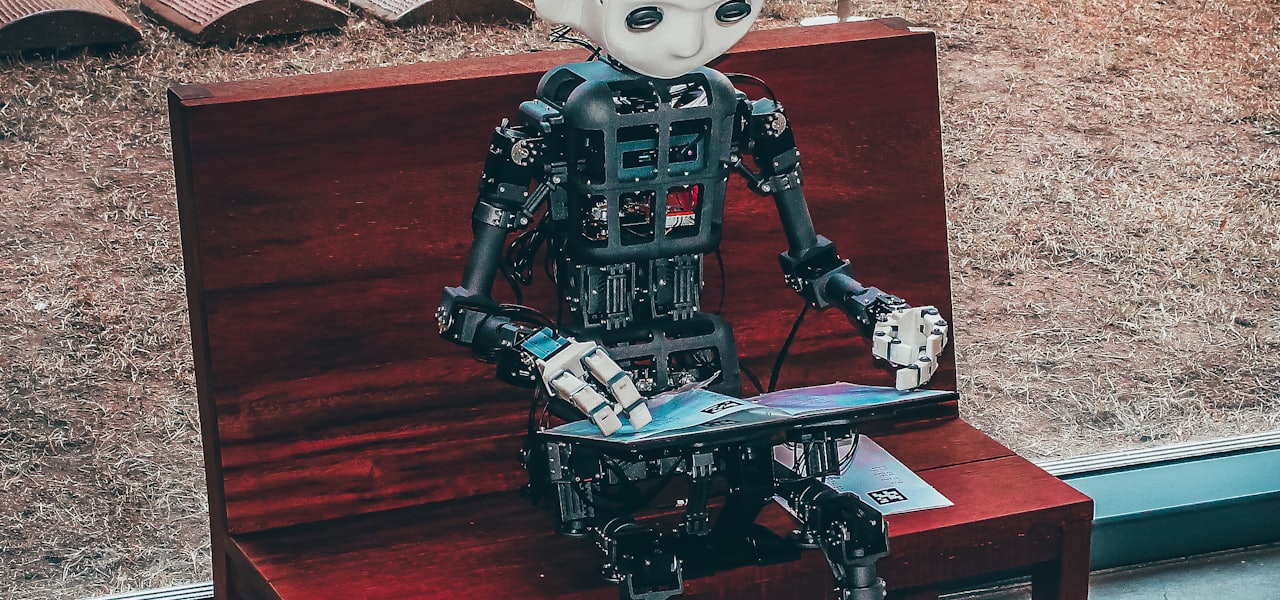
Non-human (also spelled nonhuman) is any entity displaying some, but not enough, human characteristics to be considered a human. The term has been used in a variety of contexts and may refer to objects that have been developed with human intelligence, such as robots or vehicles. == Organisms == === Animal rights and personhood === In the animal rights movement, it is common to distinguish between "human animals" and "non-human animals". Participants in the animal rights movement generally recognize that non-human animals have some similar characteristics to those of human persons. For example, various non-human animals have been shown to register pain, compassion, memory, and some cognitive function. Some animal rights activists argue that the similarities between human and non-human animals justify giving non-human animals rights that human society has afforded to humans, such as the right to self-preservation, and some even wish for all non-human animals or at least those that bear a fully thinking and conscious mind, such as vertebrates and some invertebrates such as cephalopods, to be given a full right of personhood. === The non-human in philosophy === Contemporary philosophers have drawn on the work of Henri Bergson, Gilles Deleuze, Félix Guattari, and Claude Lévi-Strauss (among others) to suggest that the non-human poses epistemological and ontological problems for humanist and post-humanist ethics, and have linked the study of non-humans to materialist and ethological approaches to the study of society and culture. == Software and robots == The term non-human has been used to describe computer programs and robot-like devices that display some human-like characteristics. In both science fiction and in the real world, computer programs and robots have been built to perform tasks that require human-computer interactions in a manner that suggests sentience and compassion. There is increasing interest in the use of robots in nursing homes and to provide elder care. Computer programs have been used for years in schools to provide one-on-one education with children. The Tamagotchi toy required children to provide care, attention, and nourishment to keep it "alive".
AI-complete
In the field of artificial intelligence (AI), tasks that are hypothesized to require artificial general intelligence to solve are informally known as AI-complete or AI-hard. Calling a problem AI-complete reflects the belief that it cannot be solved by a simple specific algorithm. Prior to 2013, problems supposed to be AI-complete included computer vision, natural language understanding, and dealing with unexpected circumstances while solving any real-world problem. AI-complete tasks were notably considered useful for distinguishing humans from automated agents, as CAPTCHAs aim to do. == History == The term was coined by Fanya Montalvo by analogy with NP-complete and NP-hard in complexity theory, which formally describes the most famous class of difficult problems. Early uses of the term are in Erik Mueller's 1987 PhD dissertation and in Eric Raymond's 1991 Jargon File. Expert systems, that were popular in the 1980s, were able to solve very simple and/or restricted versions of AI-complete problems, but never in their full generality. When AI researchers attempted to "scale up" their systems to handle more complicated, real-world situations, the programs tended to become excessively brittle without commonsense knowledge or a rudimentary understanding of the situation: they would fail as unexpected circumstances outside of its original problem context would begin to appear. When human beings are dealing with new situations in the world, they are helped by their awareness of the general context: they know what the things around them are, why they are there, what they are likely to do and so on. They can recognize unusual situations and adjust accordingly. Expert systems lacked this adaptability and were brittle when facing new situations. DeepMind published a work in May 2022 in which they trained a single model to do several things at the same time. The model, named Gato, can "play Atari, caption images, chat, stack blocks with a real robot arm and much more, deciding based on its context whether to output text, joint torques, button presses, or other tokens." Similarly, some tasks once considered to be AI-complete, like machine translation, are among the capabilities of large language models. == AI-complete problems == AI-complete problems have been hypothesized to include: AI peer review (composite natural language understanding, automated reasoning, automated theorem proving, formalized logic expert system) Bongard problems Computer vision (and subproblems such as object recognition) Natural language understanding (and subproblems such as text mining, machine translation, and word-sense disambiguation) Autonomous driving Dealing with unexpected circumstances while solving any real world problem, whether navigation, planning, or even the kind of reasoning done by expert systems. == Formalization == Computational complexity theory deals with the relative computational difficulty of computable functions. By definition, it does not cover problems whose solution is unknown or has not been characterized formally. Since many AI problems have no formalization yet, conventional complexity theory does not enable a formal definition of AI-completeness. == Research == Roman Yampolskiy suggests that a problem C {\displaystyle C} is AI-Complete if it has two properties: It is in the set of AI problems (Human Oracle-solvable). Any AI problem can be converted into C {\displaystyle C} by some polynomial time algorithm. On the other hand, a problem H {\displaystyle H} is AI-Hard if and only if there is an AI-Complete problem C {\displaystyle C} that is polynomial time Turing-reducible to H {\displaystyle H} . This also gives as a consequence the existence of AI-Easy problems, that are solvable in polynomial time by a deterministic Turing machine with an oracle for some problem. Yampolskiy has also hypothesized that the Turing Test is a defining feature of AI-completeness. Groppe and Jain classify problems which require artificial general intelligence to reach human-level machine performance as AI-complete, while only restricted versions of AI-complete problems can be solved by the current AI systems. For Šekrst, getting a polynomial solution to AI-complete problems would not necessarily be equal to solving the issue of artificial general intelligence, while emphasizing the lack of computational complexity research being the limiting factor towards achieving artificial general intelligence. For Kwee-Bintoro and Velez, solving AI-complete problems would have strong repercussions on society.
Data Science and Predictive Analytics
The first edition of the textbook Data Science and Predictive Analytics: Biomedical and Health Applications using R, authored by Ivo D. Dinov, was published in August 2018 by Springer. The second edition of the book was printed in 2023. This textbook covers some of the core mathematical foundations, computational techniques, and artificial intelligence approaches used in data science research and applications. By using the statistical computing platform R and a broad range of biomedical case-studies, the 23 chapters of the book first edition provide explicit examples of importing, exporting, processing, modeling, visualizing, and interpreting large, multivariate, incomplete, heterogeneous, longitudinal, and incomplete datasets (big data). == Structure == === First edition table of contents === The first edition of the Data Science and Predictive Analytics (DSPA) textbook is divided into the following 23 chapters, each progressively building on the previous content. === Second edition table of contents === The significantly reorganized revised edition of the book (2023) expands and modernizes the presented mathematical principles, computational methods, data science techniques, model-based machine learning and model-free artificial intelligence algorithms. The 14 chapters of the new edition start with an introduction and progressively build foundational skills to naturally reach biomedical applications of deep learning. Introduction Basic Visualization and Exploratory Data Analytics Linear Algebra, Matrix Computing, and Regression Modeling Linear and Nonlinear Dimensionality Reduction Supervised Classification Black Box Machine Learning Methods Qualitative Learning Methods—Text Mining, Natural Language Processing, and Apriori Association Rules Learning Unsupervised Clustering Model Performance Assessment, Validation, and Improvement Specialized Machine Learning Topics Variable Importance and Feature Selection Big Longitudinal Data Analysis Function Optimization Deep Learning, Neural Networks == Reception == The materials in the Data Science and Predictive Analytics (DSPA) textbook have been peer-reviewed in the Journal of the American Statistical Association, International Statistical Institute’s ISI Review Journal, and the Journal of the American Library Association. Many scholarly publications reference the DSPA textbook. As of January 17, 2021, the electronic version of the book first edition (ISBN 978-3-319-72347-1) is freely available on SpringerLink and has been downloaded over 6 million times. The textbook is globally available in print (hardcover and softcover) and electronic formats (PDF and EPub) in many college and university libraries and has been used for data science, computational statistics, and analytics classes at various institutions.
User-defined function
A user-defined function (UDF) is a function provided by the user of a program or environment, in a context where the usual assumption is that functions are built into the program or environment. UDFs are usually written for the requirement of its creator. == BASIC language == In some old implementations of the BASIC programming language, user-defined functions are defined using the "DEF FN" syntax. More modern dialects of BASIC are influenced by the structured programming paradigm, where most or all of the code is written as user-defined functions or procedures, and the concept becomes practically redundant. == COBOL language == In the COBOL programming language, a user-defined function is an entity that is defined by the user by specifying a FUNCTION-ID paragraph. A user-defined function must return a value by specifying the RETURNING phrase of the procedure division header and they are invoked using the function-identifier syntax. See the ISO/IEC 1989:2014 Programming Language COBOL standard for details. As of May 2022, the IBM Enterprise COBOL for z/OS 6.4 (IBM COBOL) compiler contains support for user-defined functions. == Databases == In relational database management systems, a user-defined function provides a mechanism for extending the functionality of the database server by adding a function, that can be evaluated in standard query language (usually SQL) statements. The SQL standard distinguishes between scalar and table functions. A scalar function returns only a single value (or NULL), whereas a table function returns a (relational) table comprising zero or more rows, each row with one or more columns. User-defined functions in SQL are declared using the CREATE FUNCTION statement. For example, a user-defined function that converts Celsius to Fahrenheit (a temperature scale used in USA) might be declared like this: Once created, a user-defined function may be used in expressions in SQL statements. For example, it can be invoked where most other intrinsic functions are allowed. This also includes SELECT statements, where the function can be used against data stored in tables in the database. Conceptually, the function is evaluated once per row in such usage. For example, assume a table named Elements, with a row for each known chemical element. The table has a column named BoilingPoint for the boiling point of that element, in Celsius. The query would retrieve the name and the boiling point from each row. It invokes the CtoF user-defined function as declared above in order to convert the value in the column to a value in Fahrenheit. Each user-defined function carries certain properties or characteristics. The SQL standard defines the following properties: Language - defines the programming language in which the user-defined function is implemented; examples include SQL, C, C# and Java. Parameter style - defines the conventions that are used to pass the function parameters and results between the implementation of the function and the database system (only applicable if language is not SQL). Specific name - a name for the function that is unique within the database. Note that the function name does not have to be unique, considering overloaded functions. Some SQL implementations require that function names are unique within a database, and overloaded functions are not allowed. Determinism - specifies whether the function is deterministic or not. The determinism characteristic has an influence on the query optimizer when compiling a SQL statement. SQL-data access - tells the database management system whether the function contains no SQL statements (NO SQL), contains SQL statements but does not access any tables or views (CONTAINS SQL), reads data from tables or views (READS SQL DATA), or actually modifies data in the database (MODIFIES SQL DATA). User-defined functions should not be confused with stored procedures. Stored procedures allow the user to group a set of SQL commands. A procedure can accept parameters and execute its SQL statements depending on those parameters. A procedure is not an expression and, thus, cannot be used like user-defined functions. Some database management systems allow the creation of user defined functions in languages other than SQL. Microsoft SQL Server, for example, allows the user to use .NET languages including C# for this purpose. DB2 and Oracle support user-defined functions written in C or Java programming languages. === SQL Server 2000 === There are three types of UDF in Microsoft SQL Server 2000: scalar functions, inline table-valued functions, and multistatement table-valued functions. Scalar functions return a single data value (not a table) with RETURNS clause. Scalar functions can use all scalar data types, with exception of timestamp and user-defined data types. Inline table-valued functions return the result set of a single SELECT statement. Multistatement table-valued functions return a table, which was built with many TRANSACT-SQL statements. User-defined functions can be invoked from a query like built‑in functions such as OBJECT_ID, LEN, DATEDIFF, or can be executed through an EXECUTE statement like stored procedures. Performance Notes: User-defined functions are subroutines made of one or more Transact-SQL statements that can be used to encapsulate code for reuse. It takes zero or more arguments and evaluates a return value. Has both control-flow and DML statements in its body similar to stored procedures. Does not allow changes to any Global Session State, like modifications to database or external resource, such as a file or network. Does not support output parameter. DEFAULT keyword must be specified to pass the default value of parameter. Errors in UDF cause UDF to abort which, in turn, aborts the statement that invoked the UDF. === Apache Hive === Apache Hive defines, in addition to the regular user-defined functions (UDF), also user-defined aggregate functions (UDAF) and table-generating functions (UDTF). Hive enables developers to create their own custom functions with Java. === Apache Doris === Apache Doris, an open-source real-time analytical database, allows external users to contribute their own UDFs written in C++ to it.
Personoid
Personoid is the concept coined by Stanisław Lem, a Polish science-fiction writer, in Non Serviam, from his book A Perfect Vacuum (1971). His personoids are an abstraction of functions of human mind and they live in computers; they do not need any human-like physical body. In cognitive and software modeling, personoid is a research approach to the development of intelligent autonomous agents. In frame of the IPK (Information, Preferences, Knowledge) architecture, it is a framework of abstract intelligent agent with a cognitive and structural intelligence. It can be seen as an essence of high intelligent entities. From the philosophical and systemics perspectives, personoid societies can also be seen as the carriers of a culture. According to N. Gessler, the personoids study can be a base for the research on artificial culture and culture evolution. == Personoids on TV and cinema == Welt am Draht (1973) The Thirteenth Floor (1999)